Product · Engagements
After you sign, the work lives here: type, money that means one thing, and a status you can see coming. Time, invoices, and meetings hang off this object.
Start freeFree during beta · No credit card required

What it does
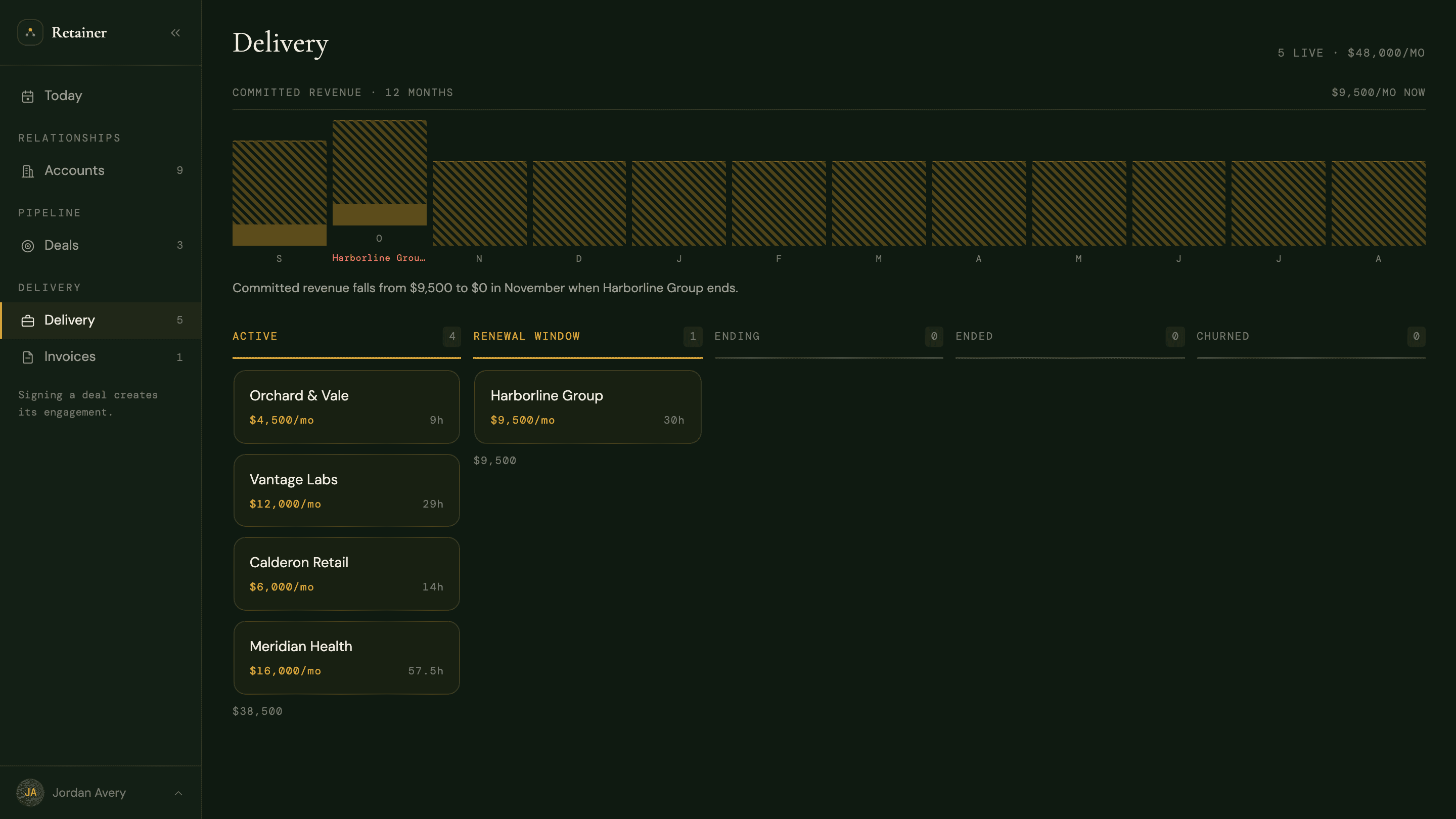
The book after the signature — what you are actually delivering, and when it ends.
A retainer is monthly. A project is a total. Hourly is uncommitted. The number means one thing.
Active, renewal window, ending, ended, churned. Renewal window is the one the system sets when the end date gets close.
Hours, invoices, and meetings attach to the engagement. Context does not die at the handoff from the deal.
How it works
New work usually arrives by signing. Existing clients can get an engagement directly.
That is what committed revenue and the renewal window read. Hourly contributes hours, not a committed figure.
When it is close and auto-renew is off, status moves to renewal window and Today surfaces it.
Log hours, raise invoices, and keep meetings here. This is the delivery record.
A deal is the selling. An engagement is the work after the signature. Signing converts one into the other. Money, hours, and invoices live on the engagement only.
Retainer, project, and hourly. Each type decides what its money means — monthly, a contract total, or none until you bill hours.
No. Retainer watches unbilled hours and unpaid invoices because those are money at risk. It does not do the books, payroll, or accounting.
Sign up now and use everything free while Retainer is in beta. Paid plans will be announced before beta ends; beta users get notice and preferred pricing.
Also in Retainer
Free during beta · No credit card required
Start free